Showing posts with label process. Show all posts

Tuesday, November 03, 2009

early influences


What was the first two dimensional piece of art that really had a strong influence on you?

I thought about this for a few minutes, then one image came really strongly to mind. I remember seeing it in a gallery in Glasgow - very well positioned right at the end of a long hallway. You come around the corner and there it is - Dali's Christ of Saint John of the Cross. Had a strong impact on me at the time. Has stuck with me ever since, on some level. I only really give it much conscious thought again after being asked the question above, in a workshop. Then I actually went back and looked at it and took in the themes.

Saturday, September 05, 2009

lessons and new ideas

first guitar lesson

Lots of things been going on in the last month or so. I finished up the images from the Ironman triathlon project. Well - I finished taking the pictures. I've done the basic editing too, but haven't really looked at them all as a set. Part of the delay has been I've wanted to get a bit of distance from them, but also that I wasn't quite sure what I wanted to do with them. Initially I was shooting them with the idea that there would be a book, and that may still happen. Then I've been kicking around the idea of a small gallery show or end of season party and show, but that would probably need some sponsorship to pay for several larger prints. I did get one image accepted in the Texas Photo international competition opening next weekend, which is a thrill, but still not really the focus of the project. I'd also been contemplating putting something together for the SlideLuck PotShow coming up here in November.

Things fell in to place a bit more on Thursday night here, when I was at the Gathering of Photographers meetup in Austin. I hadn't been to this group before and had a great time. There were several very accomplished photographers there and I got some interesting ideas. In particular, I spent a while picking Julia Robinson's brain and seeing some of her multimedia slideshows. She was kind enough to put up with all my stupid questions and point me in what seems to be a good direction. I've always really enjoyed the sort of work put out by mediastorm, and the general mixing of still images along with audio. I'm a bit of a 'This American Life' and Ira Glass junkie as well. One thing I've realised in the last couple of years is that I want to try and tell stories with my photography, rather than just being happy with a series of greatest hits or one off images. I think the multimedia format has a lot of potential for that. Not really interested in video yet and there is a lot of power in looking at a still image, with audio that increases or expands upon the information in the image, without going to moving pictures.

Of course, that now means I need to work out how to put all that together. I've taken the pictures, but I didn't record any audio. I have a small Olympus WS-110 digital recorder that I think will be good enough to pick up the audio I need, but I have to go record it. Which now means I'm having to consider doing interviews, recording background sounds and arranging some instrumental backing music. Then I need to learn how to mix all those bits of audio together and sync it up to the images. The prospect of learning all this new stuff has really lit a candle under me - it's exciting! Reminds me of all the book structure and design that I absorbed for the first SoFoBoMo.

This evening, I was at Piercarlo's gallery show CHAN-CHAN. He did it in conjunction with another artist - a painter - Luis Abreux. Combined, they had paintings and photography hanging together. The images were all related to Cuba in various ways, and there was a live band playing music from the region too. It struck me that this was an even more engrossing multimedia presentation of the work. The band really evoked the feel of the area and helped transport you while looking at the images.

On the way home from that show, I ran into a friend of mine who's a great musician. Woode Wood is a fixture on the local running trail, playing his music and working on his videos. Things are picking up for him and he's putting a band together now. We hung out for a while and I was lucky enough to get my first guitar lesson from him. My fingertips are still sore. I was also able to arrange to license some of his music as the backing score for the slideshow - things are falling into place already! Check out his videos and vote for them on YouTube.

Sunday, August 09, 2009

a capitol idea

capitol

Trying something new, for me, on a very well worn subject. I was part of an organised photo walk last weekend, that made a beeline for the capitol building. I've shot this so many times over the last ten years but tried to come up with a different approach. This is about 200 frames, exposed at different EV values to give some interest, and composed using Photoshop's photomerge with fairly non-standard settings, to make it work badly. Rather than trying to make one seamless blend of all the images, so that it looks like I had a wide angle lens with me, I like trying to assemble it in a slightly more incorrect way, to give the resulting image some more character. I've done this with landscapes before, using a 50mm lens. Here I used an 85mm lens and just shot away. It's useful to fix the white balance or shoot in RAW and assemble all the images in the same white balance setting, just to avoid colour shifts, unless of course that's what you are after.

Tuesday, June 09, 2009

zig when they zag

danskin-177

A friend was kind enough to remind me again about picking the path less travelled. We were talking about lens choices for a possible trip to Yellowstone. Considering renting high quality, long telephoto lenses. I mentioned about bringing a 500mm mirror lens. Crappy optics. Not worth using. Manual focus. She pointed out that I'd get different shots to most people. Same with shooting portraits up close with a wide angle lens. (and congratulations to Kate for finishing her first triathlon this weekend)

Some times it is worth picking your favourite piece of received wisdom and doing just exactly the opposite. You'll get something different. You might find something new for you. Maybe it won't work, maybe it will. But you could well be surprised. I like this shot of American football, by Winograd as another fine example of this idea. A friend of mine was lucky enough to study with Winograd and is also constantly trying to go in the other direction to everyone else. His blog is well worth reading as a result.

So your mission, if you chose to accept it, is to go and do something you think 'shouldn't be done' this week. Try doing the opposite of what you think is the right way to take a picture. Let me know how it goes.


Friday, June 05, 2009

taking the narrative machete to the democratic jungle

TWO BILLIONTH on Flickr - Photo Sharing! three billionth image on flickr

Attended the Alec Soth lecture at the Austin Center of Photography last night. They are doing a fantastic job for such a young organization, getting in great photographers who are giving interesting talks. Alec Soth talked about his ennui with photography as a medium. Starting out quite frustrated and negative about image making. Partly this was in the context of what he called the democratic jungle, riffing on William Eggleston's idea of the democratic forest. That everything is equally important as a subject and everything is up for having pictures taken. No need for much in the way of subject selection or thought - everything is a viable subject. In the same context, he showed the 2-billionth picture that's been photographed and uploaded to flickr - it looked a lot like an Eggleston image. This morning I had a look. They've passed 3 billion images now (some time in 2008 - shown above on the right) Facebook has over 10 billion pictures. Ten billion pictures.

As he tried to lighten the dark mood, he proposed that he thinks the narrative machete is the way out of this democratic jungle. That using photography to tell stories and create sequences of images is the only way forward, to do anything interesting. There was a section of 'understanding comics' shown to support this and then off to the portraiture. I'd looked through a lot of his portraits again, before going along to the talk. I'd been struck by how just slightly out of the normal each of the subjects were, often in their placement or relationship with the camera. He described much of his portrait process as really trying not to connect with the subject. Working with a large format camera, hiding under the fabric, not talking much. Waiting until the subject disconnects and withdraws into their own thoughts, before taking the pictures. He described trying to not take a picture of the person, but of the space between the person and the camera. That does a good job of describing what I'd felt was slightly odd about all the portraits. The disconnect with the subject, viewer and photographer, that repeats in his portraits.

He also delved into various parts of his published work, describing the process he follows to find images (something of a freeform word association with a slightly odd twist) and how those themes repeat throughout his work. It was interesting to hear how he uses overarching, obvious themes to help explain the work, even when often his own personal motivation is something quite different. This seems to come from early shows that he had a hard time explaining. So something like 'sleeping by the Mississippi' is superficially about that river, but mostly he's trying to explore other concepts - that are quite visible in the images. Similarly with Niagara. All in all, a fascinating and insightful chat about photography. Inspired me to try harder and depressed me about the whole state of photography in equal measure.

I think the ACP is doing a great job. Mary Ellen Mark talked about how great things were in the past and complained about how things are, how frustrated she is now - towards the end of a career. Alec Soth was much more interesting. He's at the middle and currently at the height of his career, 1 year after being accepted at Magnum as a full member. He just talked about how things are, exposing all the troubling flaws in this easy access visual art and describing his way forward. Next up, in September, Elliott Erwitt.

Tuesday, May 19, 2009

enthusiastic about enfuse

dawn

I've dabbled with HDR photography a bit in the past, but always felt the results were quite cartoonish. The saturation is often off the charts and the local contrast added by most tone mapping algorithms typically seems very heavy handed, for what I want to achieve. While that is a perfectly valid thing to do, it just doesn't appeal to me that much. I have managed to do some more realistic HDR images, using the Wukong beta/ Essential HDR product from Imaging Luminary but since I moved to a Mac, I haven't been able to use their software. I started looking for something similar for OS X and got a recommendation for Enfuse. This is an open-source solution to the problem, that takes quite a different approach to blending the exposures.

Instead of generating a merged, high dynamic range image with floating point pixel values, the enfuse algorithm picks out from across the various exposures what it considers to be the best exposed pixels for a particular region, then merges them all together. There is some level of control for the user; to provide masks, or bias it towards keeping contrast or saturation in the image. The algorithm can also automatically align images, if you haven't shot them all on a tripod. I've found that the defaults work well to merge a well exposed set of images. The resulting merged image is then a great starting point for further adjustments.

While Enfuse is open source and available for free, I've been using an Adobe Lightroom plugin that is sold as donationware, by Timothy Armes. The LR/Enfuse plugin simplifies running the merge from Lightroom. I just have to select the various exposures and run the plugin to get a merged result back in Lightroom, ready for further adjustment.

greasewood

greasewood enfuse

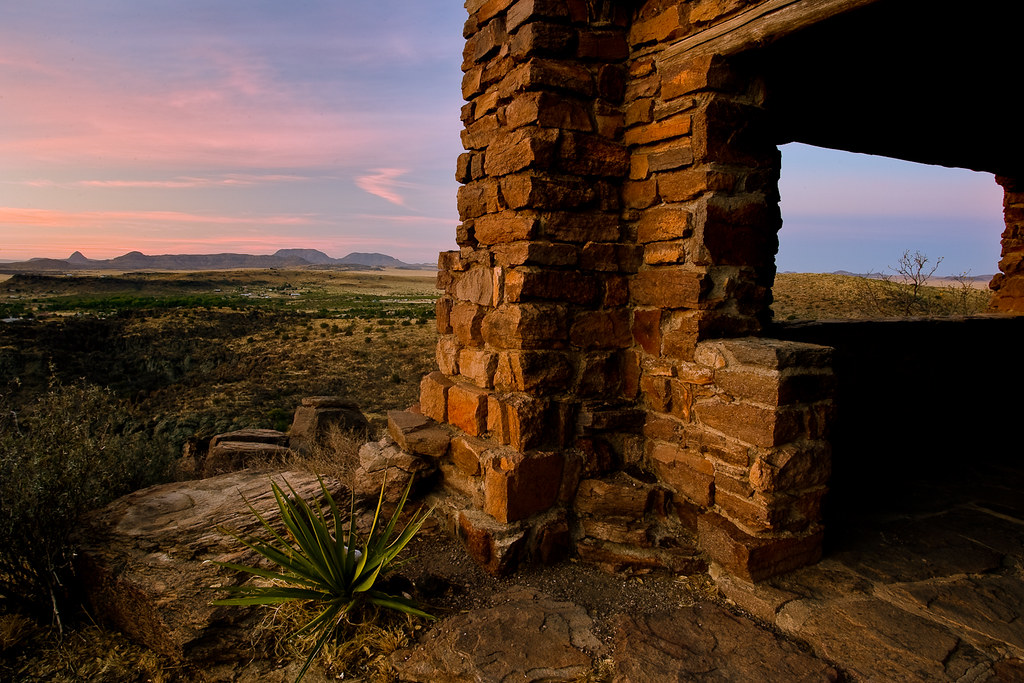
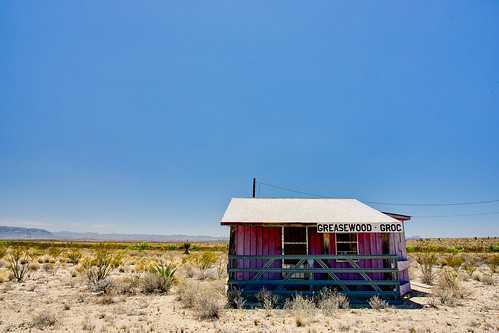
Many years ago I learned to shoot pretty wide brackets around a given exposure when I'm working on a tripod. With digital, the brackets are essentially free and this ensures you have all the data you might need to merge exposures back at home. Particularly when working with fleeting light or in hard to get to locations, I'd rather shoot a few more frames at the time, than wish I had them when I got home. I'll typically pick a working f-stop, based on the depth of field I want in the scene, then shoot at one stop intervals around the metered exposure, from -2EV, -1EV, 0, +1EV and +2EV. I normally do this in Aperture Priority mode, so that only the shutter speed is changing, but the depth of field is constant. In some cases, if there are particularly extreme lighting situations, I might shoot another stop above or below those as well, but I've found that five stop increment is often more than I need, particularly shooting around twilight. These 5 exposures give me a great starting point to blend for a final image. In the past I might have processed them as multiple exposures and then layered them in Photoshop, using masks to pick out particular parts of the image. Now they are a great starting point for Enfuse. In the example above, the porch of the building was in really heavy shadow, in the noon day sun, so I've shot 6 exposures, to get some detail and deep colour in the shadow areas (in the lightest exposure, to the far right), while still trying to keep some detail in the white, reflective roof (in the leftmost exposure).

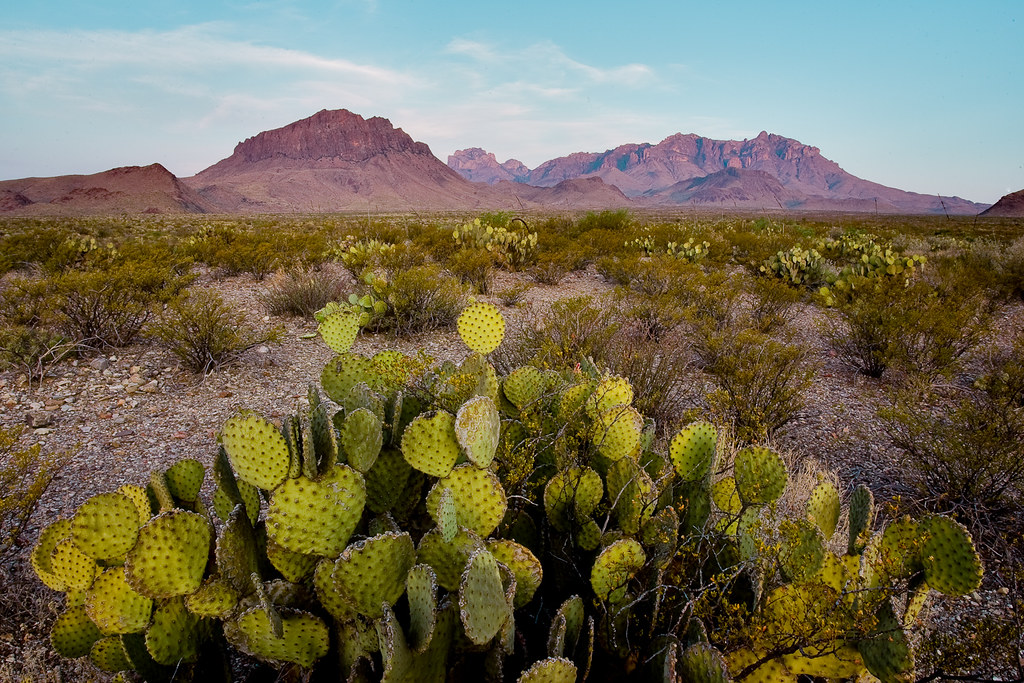
To run the merge, I pick the darkest exposure that still had the right levels for the lightest parts of the image and the same at the other end, selecting the lightest exposure that had the shadow values that I wanted. I then use those as the outliers and pick all the in-between exposures and run the Enfuse plugin. I haven't tried varying the default values yet, as it has given consistently good results from the images I took in Big Bend. Enfuse is a great option if you are interested in working with scenes with a large range of tonalities or extremes of lighting, but want to try to produce more natural results. The price is right too. There are other GUIs available for Enfuse, if you don't like using Lightroom. I haven't had any experience with these, but options such as EnfuseGUI do exist if you wanted to avoid Lightroom and also the command line.

chisos

Monday, May 11, 2009

the aftermath

moonrise over casa grande

So back home and now trying to manage the rest of the SoFoBoMo process. Haven't really even started looking at the images, never mind editing any of them. Just shuffling around the 20Gb, 2000+ image files, renaming them, backing them up, getting previews set up and that sort of thing, ready to start looking at what I took. I've picked out a few that have caught my eye and done a quick edit, like this one above and the previous two posts. I've got no idea if they will make the cut for the final book. I don't even know what the final book is going to be about - probably just bundled under the theme of 'road trip'. I'm sure Colin Pantall has a 'how not to photograph' that addresses that sort of random collecting head on, but it is what I have.

Process while traveling was pretty straight forward. Shoot things that interested me. Drive Amanda crazy. Repeat. Then in the few evenings when we had power, dump the contents of the CF cards to my very small and underpowered linux laptop drive and also to a removable backup drive. These were then stored separate from each other, so that if someone stole my camera bag, or broke into the car, or stole the car, I'd at least have the backups and a story for the insurance company. I did no editing and almost no review all last week. No time, too small a screen, limited power for the camera to even chimp much, particularly when trying to do night shots (long exposure equals quick battery drain). The fun part of that is that a week later I'm now actually hopefully going to start getting to see the images. (when this backup actually finishes) The bad I suppose is that I could well have screwed up many days of things without realising it and it would be about 500 miles for a retake.

The other thing I'm finally getting to grips with, spurred on by SoFoBoMo is calibrating this new Mac and getting things like Adobe Photoshop actually configured again. All things I should have done a few weeks ago when I got the computer, but laziness always finds a way. I shot quite a few images with the thought or potential to make HDR versions of the results, even though I've never tried it with the Mac OS X HDR software options (which I don't currently know much about - any reviews, raves, suggestions there? comments very welcome).

This evening then is mostly book-keeping, fiddling, renaming, filing, sorting and getting ready to start getting ready. All busy work really but essential I suppose, if I'm going to get this random assortment of stuff into some sort of book shape. Should be fun.

The image above was taken in Big Bend National Park, in the Chisos Mountains basin. There was a fair bit of pre-planning involved - picking the right camp site, with the right view of Casa Grande, on the right day that the moon was going to rise over it, as a full moon. The tent was partially pitched with this shot in mind (and mostly pitched with how the ground sloped in mind, too) There was a large helping of luck involved too, I didn't expect the moon to rise quite so perfectly over the corner of the big mountain. That actually was painful because it meant the moon shadow was all around us for a good hour before the light really actually touched our campsite - quite frustrating if you wanted to get some sleep!

For lighting, I put a Canon 580EX II speedlite in the tent, with a full CTO gel over the flash. The tent was already orange and red, but I wanted to use the CTO gel so that I could shoot in Tungsten white balance, to really get the deep, midnight blue into the clear night sky. The CTO gel and Tungsten white balance cancel out for the tent lighting, returning it to the already red/ orange appearance. I used a Canon ST-E2 remote trigger to control the flash in TTL mode and then just waited for the moon to rise and worked out a reasonable exposure, stopped down quite far to give enough depth of field to get the mountain silhouette sharp and the tent in focus. The stopped down aperture also causes the bright moon to create the ray/ star effect.

Monday, March 09, 2009

evolution of an idea

orange

Paul had the good idea to request that we post more about SoFoBoMo and where the ideas flit in and out from, or try to capture some of the experience from last year that we gained. This evening an idea popped into my head for a SoFoBoMo project, while reading a different photography book. Reading always seems to stimulate these random ideas for projects. The main thing I've learned to do is to write them down. Then and there. So I was sent scrambling for a notebook, almost upsetting the cup of tea on the table beside me. It was just a simple idea, in part stimulated by Mark Hobson's post over on the Landscapist, about shooting a book in a day, that was very similar to Paul Lester's book in an hour from last year, One. I was thinking about what might make an accessible shoot to do in a day, maybe shooting from sunrise all the way to sunset or in to twilight. A good sunrise is always a colour event in my head and that triggered an idea from the book I'm writing, about shooting colours and using those as the motivation and guiding idea. I've used this quite often to help people get moving and taking pictures and I thought it would be a decent theme for a day's shoot.

Then I start thinking that I need 35 images and maybe I need to consider more than one colour. That leads easily to the colours in a rainbow - 7 colours, 5 shots each. Now that seems like something that could be shot in a day. Maybe the whole book could be shot and finished in a weekend without too much trouble.

But what does the book look like? Probably sections, themed or titled for each colour. Maybe I could use one of the standard mnemonics to bind the sections - Richard Of York Gave Battle In Vain. Or just go with something graphic using typography. The words repeated over and over, with the section picked out in that colour and everything else black and white. Or just repeat the word over and over.

Then maybe the pictures could tie or blend in to each other - so I shoot more solid reds for the middle images, but start to find some red/orange mixes for the overlapping sections, then more orange, all orange, then mix in some yellow and so on. These images could all be strung together small on one page as an overview of the whole book - 7 wide, 5 deep. Perhaps the cover page could be created out of letters shot on the same day, a red R and so on.

I might never make this book. It might be forgotten tomorrow - especially if I hadn't written it down. Maybe I'll come up with another 3 ideas and do 4 books in 4 weekends. This idea may well morph and evolve into something completely different. But the key was getting some of it down on paper. If you have ideas, respect them, capture them. You can always throw them away later and come up with more. But get used to paying attention to them and keeping them.

Monday, February 23, 2009

project progression

morning swim

Starting projects seems to be easy. Ideas are dime a dozen, always popping up, ready to pursued. But I find the starting bit easy. It is the follow-through that often saps my will. Even if the pictures are good it can become a struggle to keep turning up, time and again. I know from experience that each time I do, I'll see something new or exciting and get carried away. I'll find that productive, flowing place where the good pictures come from. But showing up can be such a battle. All the fears and doubts come rushing out. The idea is stupid. Nobody wants to see it. Who will care about the pictures? I'll be bothering people who have better things to do. It has been done better before. Over and again these voices in the head turn on the doubt and ridicule. Best solution is to just ignore them and get on with it. Just keep turning up and see what happens. Judge the results and the process when you've got the images in hand, not before. The job is to take the pictures not second guess the results before even turning up.

another week

hang gliding lessons

Another week over, in Raleigh - now I'm back in Austin. Another week not working on "the book". It has gotten to the point of being in double quotes. It is weighing on my mind, like my PhD thesis did, for the 10 years it languished unfinished. A low level, constant gnawing block of guilt at the back of my consciousness. I watch TV to tune it out. I go to the gym to avoid it. Drink to keep it at arms length. Blogging seems like another surrogate of avoidance. "Hey look - I'm writing - that counts - doesn't it?"

So to make progress and get out of this minefield of creativity and productivity porn I've found myself in, I guess I have to take Pressfield's advice and turn pro. Same advice as I found in the Creative Habit. Same advice in Time to Write and in Creative Authenticity.

It all boils down to this - do some work. Day after day. Everything else takes care of itself after that one piece falls into place.

the war of art

adrift with eggelston

Just finished reading the War of Art by Steven Pressfield. Like many creativity books it does well describing the barriers and frustrations that all artists seem to share, but peters out when it tries to provide solutions. I think that's because the solutions are all fundamentally very simple and at the same time intensely personal. Pressfield describes all of the frustrations and barriers to creative work as being Resistance. Others call this fear, or procrastination. All the doubting voices and things that stop you starting or help you find something else to do. All the same thing really. His solution is to treat the thing you want to do as a job. You have to turn up, if you want to or not. Day in. Day out. Just get on with it, like you do with your real job. Do the work and the muse will come, the creativity will happen.

So productivity isn't a surrogate for creativity. It is not that we try be productive to be creative. Rather, productivity is a requirement for creativity. You have to be doing the work, putting the time in, for your creative sparks to have a chance to happen. The fickle flashes of brilliance don't come if you aren't vested in the process of making the bad stuff or everyday good stuff along the way to greatness. Turn up. Do the work. Each day. Every day.

Saturday, February 21, 2009

printing

complimentary

Print is very rarely the medium I work in. I've occasionally had comments about images as being hard to print or challenging to print and that takes me by surprise - because I almost never consider it. I compose for a small screen. I edit and finish for a small, self-illuminated display. This is how I work much of he time. I used to think of this a flaw or something to address - something I needed to improve upon. Maybe it still is. But that small, self-illuminated display is a valid medium in its own right. Many, and perhaps most, photographs these days are not destined for a physical print. I'm becoming at peace with this idea.

And then there is SoFoBoMo and the final book.

Friday, February 13, 2009

unfinished

I'm more interested in a photography that is 'unfinished' - a photography that is suggestive and can trigger a conversation or dialogue. There are pictures that are closed, finished, to which there is no way in.

- Paolo Pellegrin
Maybe a clue as to why I like blur and out of focus images so much. There is some mystery left, some questions still unanswered.

Saturday, January 03, 2009

five stages of development

karekare

Several years ago, I exchanged emails with Clarke Evans from the Texas Photographic Society, on the topic of projects, getting better and general ways forward with picture taking. One of the discussions centered around the five stages of development of a photographer, as Clarke saw them. He has kindly allowed me to share some of those comments here.

Stage 1: Just got a camera and is happy to be taking pictures and getting anything that works. Doesn't really care what other people think about the photographs, just taking them for the fun of it. Shooting birthday parties, Christmas and snap shots of the family.

Stage 2: Decides to learn a little more and starts paying attention to the camera. Learns about lenses, f/stops and shutter speeds and the like. Begins to take control of the camera settings and gets some better results. Might even read the camera manual. Starts maybe entering competitions or joins a camera club.

Stage 3: Begins paying more attention to subject matter - lighting becomes important. Composition, posing of subjects. Still photographs a wide variety of subjects but the images have improved.

Stage 4: Mixes all of the first three stages and becomes a decent photographer. Can make a pretty good photograph under most situations. Knows and understands lighting, composition and how to use the camera. At this stage, the photographer is competent with a camera and making photographs. Some go on to become professional photographers, others continue as amateurs and take good pictures purely for the love of it.

Stage 5: Photographer hits upon something they want to say. It just happens. They decide to pursue a project and whole heartedly dive into it. In stage 5, the photographer has gone full circle back to Stage 1 and again doesn't care what others think of the images. They are photographing something they want to explore for their own personal reasons. A good example of this is O. Rufus Lovett's book from UT Press, Weeping Mary. Rufus went back to Weeping Mary every weekend and bought gas from one gas station and eventually asked if he could take the owner's picture. Over time he started photographing all of the 200 residents of the town. Eventually that fascination with this one subject became a book. Another example would be Ansel Adams and his persistent photographing of Yosemite.

There's nothing wrong with being at any of these stages, one isn't better than the other, just different points in the development of a point of view. Probably we are also all going back and forth between some of the middle stages at different points in time - there is always plenty to learn. I feel I've been somewhere between 3 and 4 for a while now, never quite hitting on something that really can hold my attention long enough to be something I really wanted to express.

Ted Byrne made a great comment on this post, that I think is attempting to say something similar. Too many choices and too many distractions cause us to flit around between subjects and struggle to settle in on a topic and really explore it to an interesting depth, beyond the superficial surface. I know I'm often guilty of that, jumping between subject matter and new styles, lenses or whatever catches my eye. There is certainly nothing wrong with that if it gives you enjoyment and makes good pictures, but it isn't likely to ever really amount to much. I often see that in coffee shop photography exhibits, lots of good images, with nothing at all connecting them to each other, apart from them being taken by the same person. Usually if you go to an actual gallery show, you see something quite different - a much narrower selection of subject, a common theme or message, connecting all the images to each other. Not such a catholic selection of subjects or styles on display. More concept album, less greatest hits.

The way forward isn't really that hard. Pick a project, any project. Commit to it, even for a weekend and try to make 10 great pictures. Not one, not two, but push that little bit further and explore the subject. The project could be a birthday party. It could be your favourite hobby. Or a building you find fascinating. It doesn't need to be a grand theme. It could just be your lunch. Find something that matters to you and make the pictures of it that try to express why you care about it. Go back a few times, expend some effort to go beyond that obvious first view. I spent a couple of years visiting one garden here in Austin, 2 or 3 times a month for 2 years. I think after the first 6 months I'd actually managed to work my way through all of the cliches and other people's ideas that crowded my head and actually start making my own pictures. It can take me a while to get to something fresh. Or you could be finished with the project in a day. The point is to find something to say.

Monday, December 08, 2008

posts from around the intertubes

end of summer

Something of a hodgepodge of links to things I've found worth a read in the last couple of weeks.

First to New Zealand, and Tony Bridge has a great post about the use of rules in photography and camera club judging. I've suffered from this experience a couple of times in the past. The trick I think is to get a deeper level of understanding - go beyond the superficial 'tips and tricks' aspect of the various photographic rules and understand what they are really about. Then, you can use or ignore them with some understanding of what you are trying to achieve. Along those same lines, Merlin Mann is something of a reformed version of his former trickster self and is bemoaning the sea of tips and tricks out there. He's come to realise that getting to a level of deeper understanding actually requires work. For photography, you have to take and look at a lot of pictures, to get to grips with what composition is about, not just read some books. The focus of 43Folders has switched towards more of a creativity bent, so is getting more intriguing, as it moves away from the productivity porn.

Mark Hobson has been waxing on about the process of developing vision, and if that even means anything, on the Landscapist. I like that Mark typically goes deeper into these notions than the conventional wisdom. Another fine discussion on deeper ways at looking at photographs can be found in this Daily Critique from The Mindful Eye. Craig does a great job of breaking down the more interesting aspects of how rhythm and relationships can be used within a composition to make the parts relate to the whole.

Monday, December 01, 2008

reading deprivation part two


Looking back over the week, my initial feel was that I'd failed miserably at the reading deprivation aspect of the Artist's Way. I still read blogs, I still read books. But then as I thought about it further, I realised it had actually worked better than I thought. I did try to read less and also found I did free up more time to be creative. I took more pictures this week than I've taken for months. We went to a play, ate a great meal and I took a lot of pictures; just walking around the park, playing poker, Thanksgiving dinner and just messing around in the house. Point is that the more I've been journaling and thinking about my photography, the more photography I've finally started doing. It has all been very candid, fun and free flowing. The pictures give me a lot of pleasure and it is has been really rewarding.

The pictures are very different from what I would have taken years ago - I looked back at some pictures I took at family events 5 years ago. There are hardly any of the people in them. Lots of detail shots or pictures of where we were. There would be an occasional posed group shot of everyone together, but not much more than that. I think I'm taking more pictures of what matter to me now, rather than what I think people might want to see. Hopefully along the way I'm finding my way towards creating more authentic images that might actually have something to say. It is an enjoyable path.

I also had the chance to make some prints and give them away. If you haven't done this in a while, I really recommend it. Take some pictures of some friends or family and get some prints made, then give them the pictures. It doesn't need to cost much - 4x6 prints from a local pharmacy might be 30c, online prints are closer to 20c. They might not be the most artistic or high minded pictures you've ever made, but they'll probably be some of the more rewarding. I don't see finished prints so much any more and the print quality can be pretty good. I just edited the images in Lightroom, exported them as JPEG in sRGB colour mode and put them on a USB stick. Printing took 5 minutes and cost a few dollars. You may well have plenty of pictures you took at Thanksgiving - maybe the person who hosted the party might like a couple of shots? Or maybe someone else would - I'm sure you know who they are.

Concurrent with this burst of photography, I'm getting back to being able to exercise for more than a few minutes at a time. I think there is an explicit link between these two. Not just because I'm generally more mobile or happier, but finding time for periods of creative thought really helps make things happen. For me, that's usually when I'm exercising. For others it might be the time spent watching the leaves fall, or the hypnotic state you find when driving, or maybe on a long walk. For a few months there, I wasn't able to do any of those kinds of making space to think in my life. I'd be reading, or watching TV, lying on the couch playing video games, but never really finding the times where my body was busy and my mind could relax and come up with ideas.

Tuesday, November 18, 2008

finding the time to be creative

amanda amanda

I'm always struggling to find enough time in the day to be creative, around life, work and all those other commitments. I worry about trying to clear large enough chunks of time to go and photograph, or write or even to give proper consideration to a photography book or other reading. Reading and working through 'the artist's way ' one idea has stuck - just be creative in the time you have. It might just be 15 minutes but that's enough to keep things ticking over. You don't need to drag out the tripod and the serious camera. Just make some pictures. Yesterday's series of images of Amanda at the Kure Beach pier are a good example - we only shot for about 5 minutes, but it was fun and kicked off some new ideas in my head.

Tuesday, November 11, 2008

good taste

When what you are doing just isn't as good as you aspire to be, you just have to keep working at it. Making radio shows, writing, taking pictures. Anything creative. You'll be doing it because you like it and have an idea what good is. You'll be a long way from that at first and for a long while to come. The only solution is to keep going - or quit.

Monday, November 10, 2008

productive creativity


Reading Ted Orland's The View From The Studio Doorjust now. Lots of thoughtful comments to wrap my mind around. For now I'm struck again by the need for productivity to be creative. Sitting around and thinking about great photographs doesn't make them happen. The muse doesn't strike unannounced when you aren't making pictures. A productive process is a necessary part of being creative. You've got to be making bad pictures or just making pictures to make the good pictures. Also, I'm starting to feel that over thinking the process or the pictures can be a great way to get you blocked from making any good images. The good ideas don't come from sitting, thinking about them in a vacuum. You have to be making the pictures you want to be making and part of finding what those images are is by finding them in the images you are already making. Yes, I've touched on these themes before, but it wasn't too surprising to find them again in this book.
So shoot a lot. Look at the work so far. Try to learn from it and then shoot a lot more seems to be one way forward.

Craig Tanner talks about sometimes needing to give himself permission to shoot at first. Firing off 20 or 30 random shots, just to get moving. It gets you past that feeling that every shot has to be worthwhile or meaningful and just lets you engage and get to work.

Sunday, October 05, 2008

a mixed bag of lighting

amanda kevin

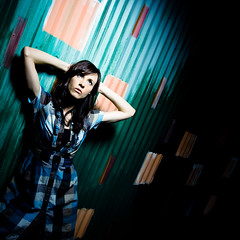
A couple of common themes for portraits in the last week. I did a lighting class last weekend and found while doing the more controlled, constructed lighting was interesting, I was still spending more time playing around with the ambient and trying to accentuate the lighting in the location. I'm not sure if I just don't really have the imagination to see completely contrived lighting, or I think really, I'm just not motivated enough to want to create it all from scratch. I do like finding the interesting light already available, then trying to build on that. I did some shots using strobes and adding in lighting, but I was still mostly working with the light I could find. One that I like was where I replaced the existing light with a strobe to essentially mimic what was there already - but being able to shoot at a much lower ISO and smaller aperture. It was in a hallway with a bare bulb hanging in the ceiling (below right) and I liked the light quality. With some help I put a strobe and a small softbox up in the same place, getting very similar light but slightly less harsh. A grid over the softbox helped control the fall off and edges, to shape it a bit more. I'd picked this hallway for the blocky green and orange wall paintings and thought it'd play well with the checked dress the model was wearing. All that I think works well, along with the lighting - but I struggle with posing a full body. That's why so much of my photography is tighter head and shoulders shots - fewer limbs to position and deal with.

kevin samantha

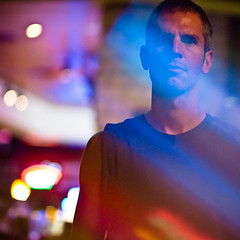
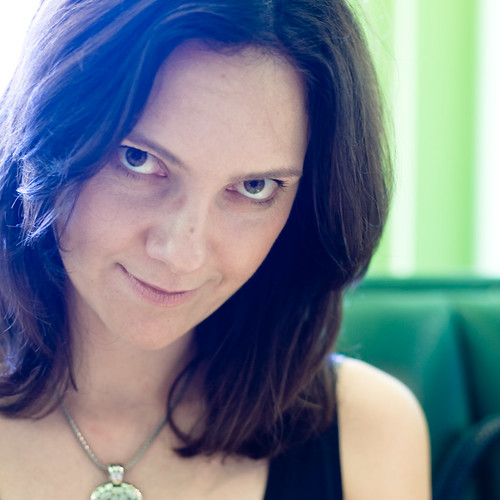
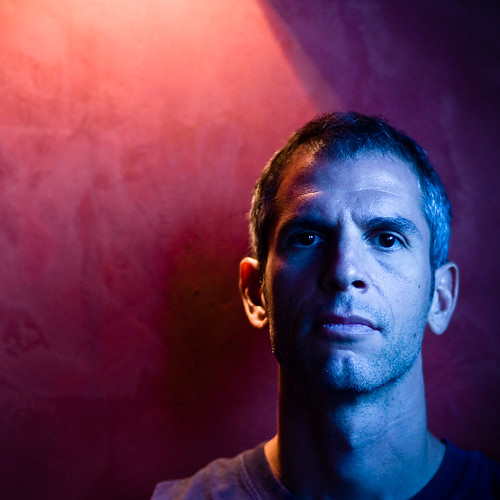
Another theme has been shooting using windows and mixing in the daylight with the available indoor light, playing with the mixed colour temperatures that you find around those edges. Eric Ogden has many portraits shot with the window actually in the frame, blowing out behind the subject and I tried a bit of that with the portrait of Amanda above. Just put the meter on center spot to ignore the background and shoot for these - nothing too clever going on. I like how the outdoor light turns slightly blue when her skin is balanced for the indoor light - made a bit stranger by the fact we were in a predominantly green-walled restaurant which added some unique colour casts to the shot. I also used an old idea of shooting through glass, for the second shot of Kevin, above, using the neon lights in the bar we were in, along with an empty, slightly dirty pint glass in front of the lens to create the coloured flare.

I've also been thinking about and cropping nearly all the shots over the last week to a square format. I've been shooting with that crop in mind and just seeing how it works for me. I doubt there will be a Hasselblad anywhere in my near future but that different crop has been interesting to work with. I'm blaming looking at Mark Tucker's portraits for that particular influence. I don't think it is something I'm going to keep doing much longer but it was interesting to try adding another arbitrary constraint into how I was shooting for a short time. It certainly changes how you arrange things in a frame.

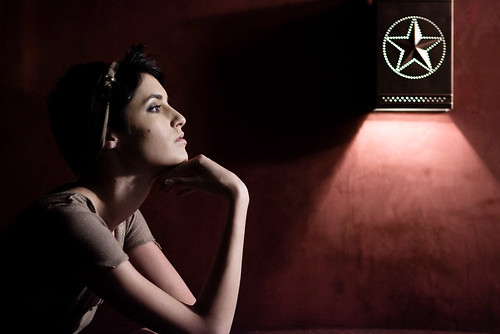
Another shot, (below) was lit using the available light and the modeling lights of the alien bee strobes that we were using. I'm not sure that that really counts as using the strobes properly, but any light that's available counts. the modeling light is low to the camera right, balancing with the wall light fixture. This could be another example of me only being able to see what the continuous sources give well and not having enough experience to predict how the brief strobe will act, but I much prefer working with the continuous light sources - it seems to suit my biases and process. Maybe I should be thinking about video more!

lauren